


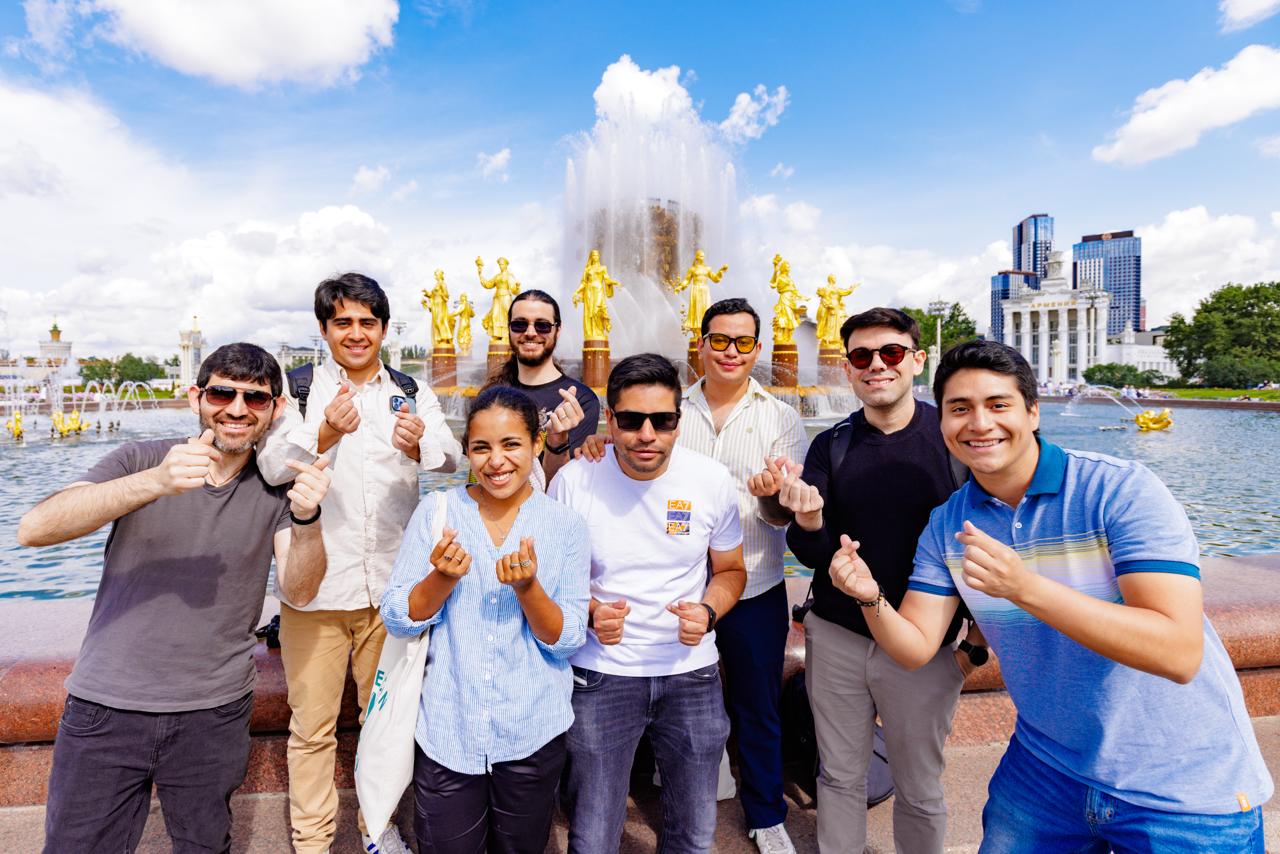
This summer, the InteRussia fellowship welcomed energy specialists from Latin American countries. The program brought together young professionals from Brazil, Colombia, Chile, Ecuador, and El Salvador for an intensive course designed to foster dialogue and knowledge exchange in the global energy landscape. The curriculum facilitated discussions on a wide range of topics, including energy security, current and long-term trends in global energy markets, the specifics of the Russian oil and gas sector, and the development prospects for nuclear and renewable energy. A significant focus was placed on exploring the future of energy relations between Russia and Latin American countries.
The practical segment of the fellowship featured visits to key energy and infrastructure facilities. Participants observed the management of Russia's national electricity system at the System Operator of the Unified Energy System. They saw the unique Skolkovo 220 kV underground substation — buried 12 meters below the surface. In St. Petersburg, the group also visited the Intelligent Laboratory of Digital Networks of the ROSSETI Group and a unique testing ground with an automated 110 kV Medvedevskaya substation. They also gained insights into urban transport energy needs at the Moscow Metro's Unified Dispatch Center and a charging station of the city’s fleet of electric buses.
To see the fuel supply chain firsthand, the group toured Transneft headquarters, the KINEF refinery, and the modern Gladkoye fuel terminal. Discussions during these visits centered around Russia's focus on innovation in the energy sector
The program also included cultural visits to sites in Moscow and St. Petersburg, such as the Pushkin Museum and the Hermitage, providing fellows with a broader context of Russian history and culture.
This fellowship became a valuable platform for professional dialogue and a deeper understanding of technological complexity of the Russian energy industry, and laid a foundation for future collaboration in the energy sector.
The InteRussia fellowship programme in Energy is implemented by ANO “Mezhdunarodniki” in collaboration with the Gorchakov Fund, St. Petersburg State University of Economics, the TV BRICS International Media Network, the Global Energy Association, the National Committee for Promoting Economic Cooperation with Latin American Countries, the Russian Energy Agency of the Russian Ministry of Energy, and Rossotrudnichestvo, with grant support from the Presidential Grants Foundation.
The practical segment of the fellowship featured visits to key energy and infrastructure facilities. Participants observed the management of Russia's national electricity system at the System Operator of the Unified Energy System. They saw the unique Skolkovo 220 kV underground substation — buried 12 meters below the surface. In St. Petersburg, the group also visited the Intelligent Laboratory of Digital Networks of the ROSSETI Group and a unique testing ground with an automated 110 kV Medvedevskaya substation. They also gained insights into urban transport energy needs at the Moscow Metro's Unified Dispatch Center and a charging station of the city’s fleet of electric buses.
To see the fuel supply chain firsthand, the group toured Transneft headquarters, the KINEF refinery, and the modern Gladkoye fuel terminal. Discussions during these visits centered around Russia's focus on innovation in the energy sector
The program also included cultural visits to sites in Moscow and St. Petersburg, such as the Pushkin Museum and the Hermitage, providing fellows with a broader context of Russian history and culture.
This fellowship became a valuable platform for professional dialogue and a deeper understanding of technological complexity of the Russian energy industry, and laid a foundation for future collaboration in the energy sector.
The InteRussia fellowship programme in Energy is implemented by ANO “Mezhdunarodniki” in collaboration with the Gorchakov Fund, St. Petersburg State University of Economics, the TV BRICS International Media Network, the Global Energy Association, the National Committee for Promoting Economic Cooperation with Latin American Countries, the Russian Energy Agency of the Russian Ministry of Energy, and Rossotrudnichestvo, with grant support from the Presidential Grants Foundation.
